

Material Flow Table
Pit-To-Table
Description
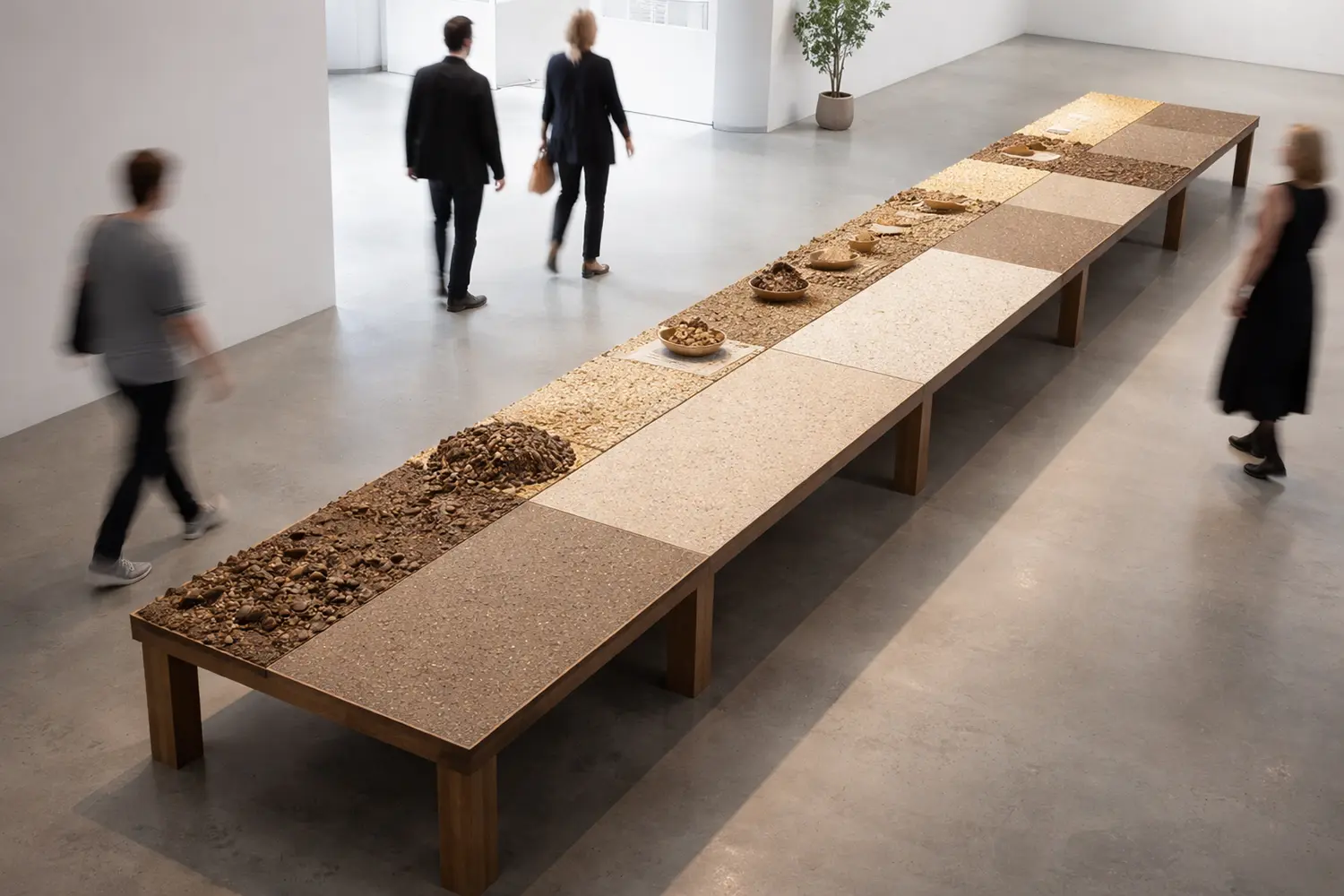
Material Flow Table is a long, communal installation made from pit-board, a surface produced from olive pomace — an agricultural by-product typically burned or discarded. The table is arranged as a sequence of modular segments, inviting visitors to move alongside it and experience material transformation as a physical journey.
Each segment traces the flow of the olive through interconnected systems: cultivation, water use, milling, waste, processing and long-term use. Subtle shifts in texture, finish and minimal engravings reference water scarcity, seasonal cycles and energy input in the Mediterranean context. Raw material samples punctuate the surface, making invisible flows tangible.
The table functions both as an exhibition piece and an active surface for gathering, discussion and shared moments. Over time, marks of use accumulate, allowing the material to carry memory and presence.
Situated in Cyprus, where environmental pressures and cultural traditions converge, Material Flow Table frames waste not as an endpoint but as part of a continuous circulation of matter, energy and knowledge. The installation demonstrates how design can make flows visible and collective.

Pit-To-Table
Pit-To-Table is a material-led initiative transforming agricultural by-products into durable architectural surfaces. Rooted in the Mediterranean olive industry, the project focuses on pit-board, a material made from olive pomace — an abundant waste stream typically burned or discarded at the end of each harvest cycle.
By redirecting this material into long-lasting boards and surfaces, Pit-To-Table follows the flow of matter from grove to mill to built environment, revealing the hidden systems that connect agriculture, production and everyday spaces. The work engages directly with local supply chains, working alongside olive mills, manufacturers and designers to give new value to what’s usually treated as waste.
Based in Cyprus, a country facing growing environmental pressures such as drought and resource scarcity, the initiative responds to the urgency of material responsibility in a fragile ecosystem, embodying a shift in how materials circulate, from short-lived extraction to long-term use.
WEBSITE: