

Mapping Climate Risks in Our City: Nicosia and Limassol
A Participatory Workshop on Heat, Flooding, Drought & Urban Resilience
DETAILS
Date: Saturday, 19 October, 2026
Time: 17:30-19:00
Location: Thinker Maker Space (Digital Fabrication Workshop)
Facilitators: Olivia Skordi & Chirag Padubidri
Required Skillset:
No previous knowledge or specific skills are required. The workshop is open to everyone, especially people who live, work or regularly spend time in Nicosia.
Description
This participatory workshop invites citizens to explore how climate-related risks are affecting Nicosia and to contribute their own knowledge and experiences to the conversation around the city’s future resilience.
The workshop begins with a short introduction to the Pathways2Resilience (P2R) and CLIMAAX-NIC projects and their research into three key climate risks: the urban heat island effect (UHIE), flooding and drought. Participants will explore interactive climate-risk maps developed for Nicosia, gaining insight into how scientific data helps identify areas of vulnerability across the city.
The focus will then shift from data to lived experience. Working collectively on a large-scale map of Nicosia, participants will locate the places where they live, work and regularly move through the city, highlighting areas where they have personally experienced excessive heat, flooding, water scarcity or other climate-related challenges. These observations will be compared with the scientific risk maps, opening a conversation around where data and everyday experience intersect — and where they might tell different stories.
The workshop concludes by moving from mapping problems to imagining responses. Participants will exchange local knowledge, practices and ideas for how their neighbourhoods could better respond and adapt to climate-related challenges.
By bringing together scientific assessment and community knowledge, the workshop contributes to a broader understanding of climate resilience at the local level. The experiences and ideas gathered will inform policy recommendations for future climate adaptation planning, creating a pathway for citizens’ perspectives to shape conversations about how Nicosia responds to a changing climate.
Disclaimer

Funded by the European Union. Views and opinions expressed are however those of the author(s) only and do not necessarily reflect those of the European Union or the granting authority. Neither the European Union nor the granting authority can be held responsible for them.
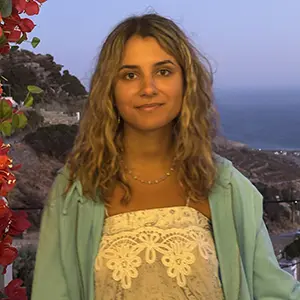
Olivia Skordi
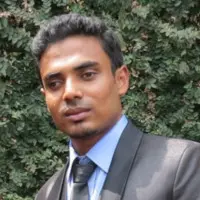
Dr. Chirag Padubidri
Olivia Skordi is a Project Manager at the European and International Affairs Office at Nicosia Municipality, where she represents the municipality in the CLIMAAX-NIC project. In this role, she coordinates and supports collaboration across municipal departments, engages key stakeholders, and leads communication and public engagement activities to raise citizen awareness.
Her work focuses on developing 10 climate change mitigation policy actions for Nicosia Municipality, addressing the three key climate risks identified through the scientific work led by the CYENS Centre of Excellence over the past two years. Olivia is passionate about advancing climate resilience, fostering cross-sector collaboration and translating scientific knowledge into practical, community-focused policy solutions.
Dr. Chirag Padubidri is a Researcher at the CYENS Centre of Excellence in Nicosia, where he contributes to the SuPerWorld Multidisciplinary Research Group, focusing on AI, remote-sensing and geospatial analytics for environmental and biodiversity monitoring.
He holds a PhD from the Cyprus University of Technology, specialising in AI-driven wildlife and habitat mapping, and an MSc in Embedded Systems from the University of Twente, Netherlands. His work integrates satellite and drone imagery, GIS and field-based sensing to develop scalable environmental intelligence solutions. Alongside his research, he is Co-founder and Operations Manager of PERIOPSIS Ltd., advancing AI-powered Earth observation applications for real-world impact.