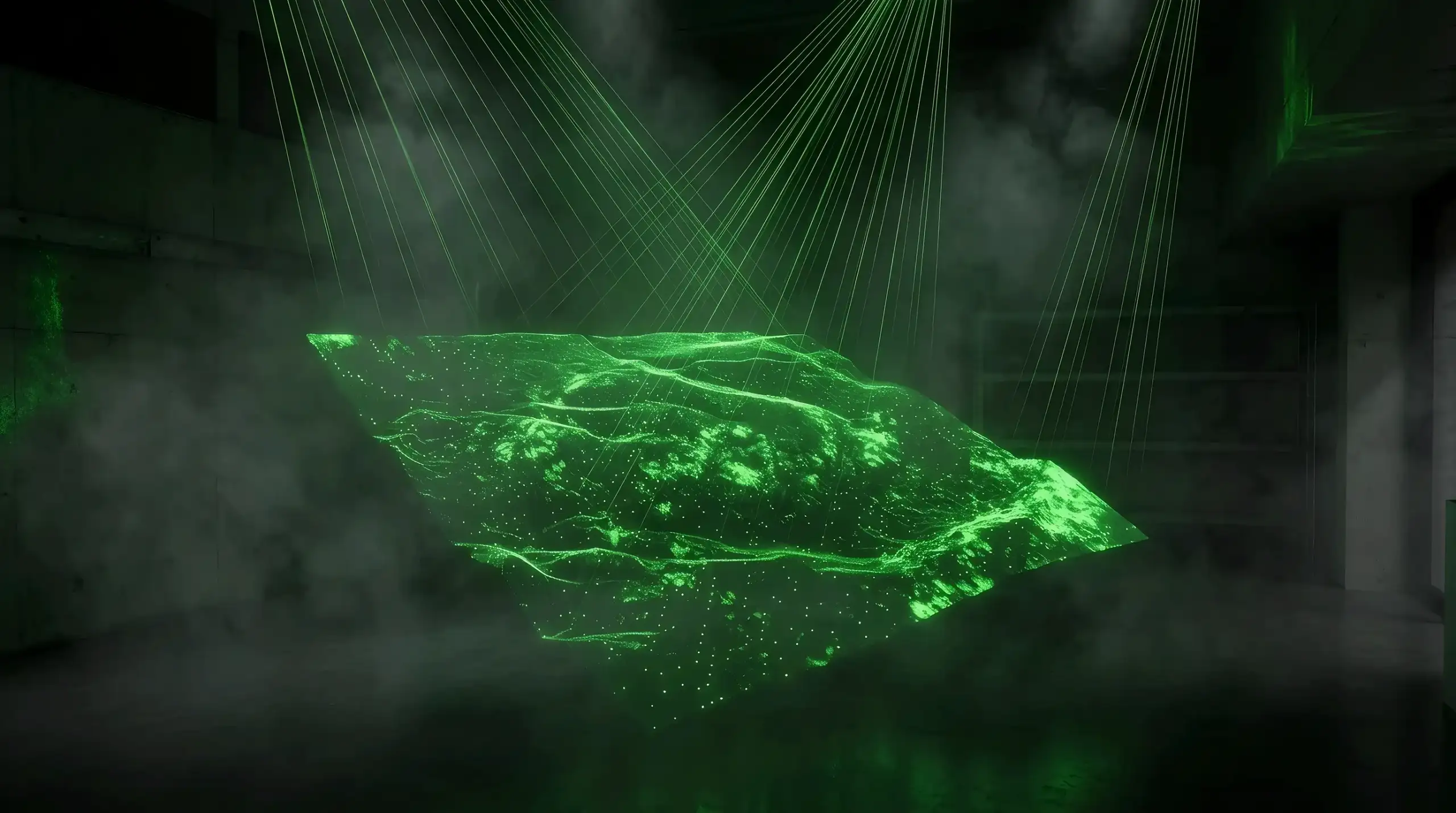
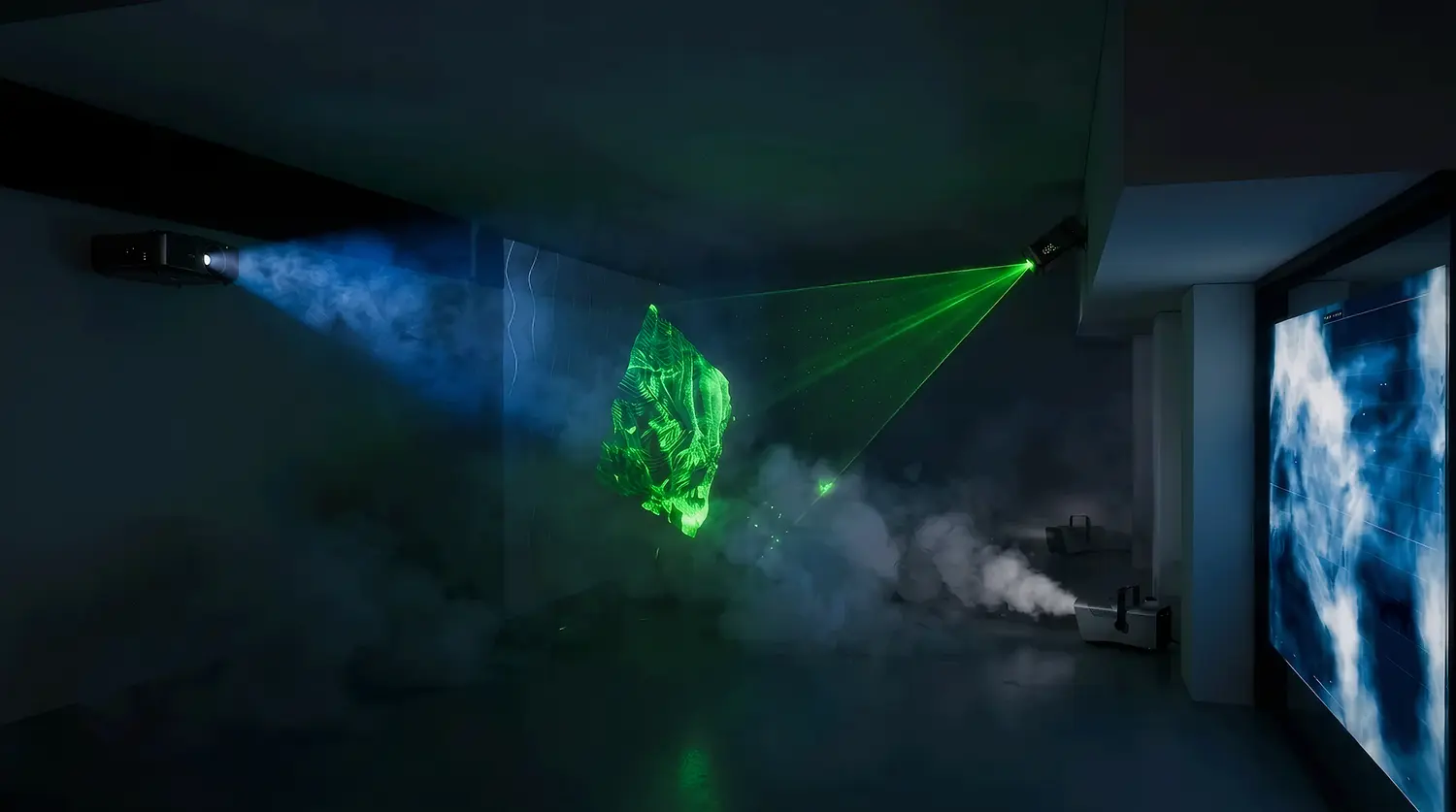
Solimán López is a contemporary artist whose practice operates at the intersection of art, science, technology and ecological transition. His work investigates how information, memory and life can be stored, transmitted and transformed across physical, biological and digital systems, using technology as both a conceptual and technical mediator. Through environmental DNA, AI, data visualisation, blockchain, sound and immersive installations, López develops poetic and critical works that make the invisible visible: genetic traces, planetary data, non-human forms of memory and the hidden processes of contemporary technology.
His research addresses key issues of our time, such as ecological transition, digital sovereignty, biodiversity preservation, posthuman identity and the politics of data, and he frequently works in collaboration with scientists, laboratories and research centres. He is recognised for a conceptual, critical and aesthetic use of technology, where technological tools are inseparable from their cultural and ethical implications.
He has exhibited in more than 20 countries across Europe, the Americas, the Middle East and Asia, in museums, biennials, fairs, scientific forums and public spaces, including international contexts such as the Brazilian Digital Art Biennial, Ars Electronica, ISEA, and institutions such as the Centre Pompidou, Museo de Arte Contemporáneo de Chile, MAAT Lisbon and the IVAM. He also actively collaborates with scientific forums such as Xpanse, as well as with more than a dozen universities internationally.